|
|


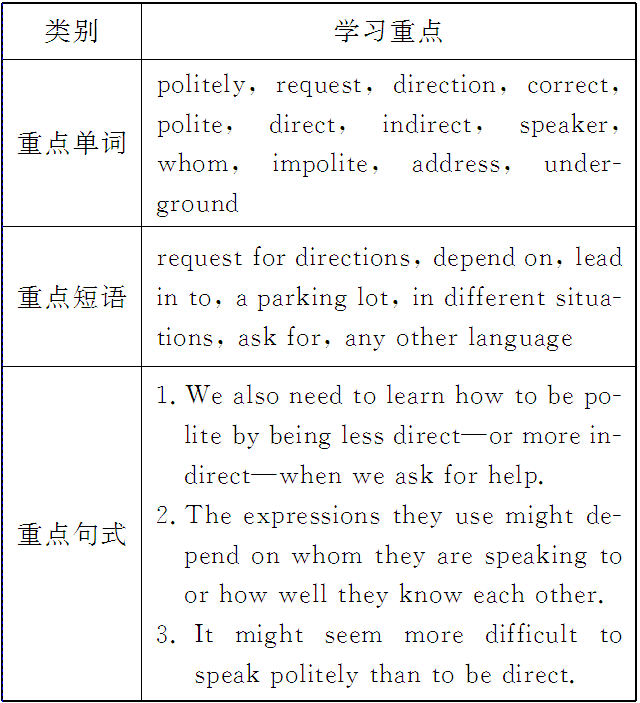

自主学习方案
1.学生自学生词,并记住单词拼写和拼读。
2.预习课本,找出重点短语和句式。(见学案中预习检测的内容)
3.读记后完成预习检测作业。
课堂导学方案
Step 1 复习
回答:What do you say if you want to go to the bank and don't know the way?
Step 2 情景导入
T: When we ask for help, we must be polite. How do we ask for information politely?
Look at the two sentences, which do you think is more polite?
A: Where are the restrooms?
B: Could you tell me where the restrooms are?
环节说明:通过比较两种方式导入新课,直接明了。
Step 3 完成教材2a~2d教学任务
1.读2b短文,找出中心句。
2.再读2b短文,在文中找出直接问句和有礼貌的请求问句。
3.教师根据学生的理解情况作一些重难点讲解。)
4.独立完成2d任务。
环节说明:通过阅读,增强了学生获取信息的能力,而且巩固了所学知识。
Step 4小结训练
( )1. He answered my questions. It made me pleased.
A.polite
B.impolite
C.politely
D.impolitely
( )2.me, could you please tell me wheremy car?
A. Excuse, park
B. Pardon, to park
C. Excuse, parking
D. Pardon, parking
答案:1.C 2.B
Step 5 完成教材3a~3b教学任务
1.学生独立完成3a的任务。
2.学生根据3b的提示练习写作。
(教师巡回指导,可参考学案中“同步作文指导”)
Step 6 问题探究
1. It's not polite to request for direction(direct).
2. The teacher uses a game (lead)in to new knowledge.
3. Look at the sign: No(park).
( )4.It soundsto say,“ Peter, could you please tell me your e—mail address?” than “Peter, tell me your e—mail address.”
A. polite B. politely
C. more polite D. politer
答案:1.directly 2.to lead 3.parking 4.C
教学反思
本课时教学中,教师主要通过比较直接询问和间接询问这两种方式导入新课。在教学中,培养学生区分判断直接问句、间接问句和有礼貌的请求问句的能力,通过这种方式巩固有礼貌地询问信息的语言目标,从而掌握宾语从句的正确用法。
|
|
 川公网安备51152402000101号 )|网站地图


 发表于 2026-3-6 04:23:29