|
|
专题08 Unit 2 Sports And Fitness 同步测试卷(新高考模式) (解析版)
第一部分 听力(共两节,满分 30 分)
第一节(共5小题;每小题1.5分,满分7.5分)
听下面5段对话。每段对话后有一个小题,从题中所给的A、B、C三个选项中选出最佳选项,并标在试卷的相应位置。听完每段对话后,你都有10秒钟的时间来回答有关小题和阅读下一小题。每段对话仅读一遍。
1. What are the speakers doing?
A. Looking after Dad. B. Buying a jacket. C. Holding a party.
2. Who is the man probably?
A. The house owner. B. The repairman. C. The tutor.
3. What’s wrong with the man?
A. He breaks a drum. B. He feels unwell. C. He forgets to take his medicine.
4. What did the man do yesterday?
A. Finished reading a book.
B. Had dinner with the woman.
C. Gave a speech.
5. How would the woman like to go home?
A. By bus. B. By subway. C. By taxi.
第二节(共15小题;每小题1.5分,满分22.5分)
听下面5段对话或独白。每段对话或独白后有几个小题,从题中所给的A、B、C三个选项中选出最佳选项,并标在试卷的相应位置。听每段对话或独白前,你将有时间阅读各个小题,每小题5秒钟;听完后,各小题将给出5秒钟的作答时间。每段对话或独白读两遍。
听第6段材料,回答第6、7题。
6. Why does the woman gain weight?
A. She eats too much. B. She feels stressed. C. She is at the age of getting fat.
7. What will the man do to lose weight?
A. Go to a yoga class. B. Join a jogging club. C. Go running every day.
听第7段材料,回答第8、9题。
8. What will the woman do tonight?
A. Go back home early. B. Go to a party. C. Talk to Mom.
9. What does the woman think of her mother? [
A. Kind. B. Strict. C. Open-minded.
听第8段材料,回答第10至12题。
10. Where are the speakers probably?
A. In a store. B. In a post office. C. At home.
11. How much will the man pay for the delivery?
A. For free. B. 15 yuan. C. 20 yuan.
12. When will the man get his delivery?
A. Today. B. Tomorrow. C. The day after tomorrow.
听第9段材料,回答第13至16题。
13. What’s the relationship between the speakers?
A. Husband and wife. B. Friends. C. Colleagues.
14. What dessert will be prepared tomorrow?
A. Fruits. B. Strawberry pie. C. Chocolate cake.
15. What day is it today?
A. Friday. B. Saturday. C. Sunday.
16. What will the man do after lunch tomorrow?
A. Watch a football game. B. Send children to school. C. Take a shower.
听第10段材料,回答第17至20题。
17. At what age did Dessi Sieburth start loving birds?
A. 6. B. 8. C. 14.
18. Why does Dessi make boxes for bluebirds?
A. They are everywhere in his hometown.
B. They are easy to track.
C. They lose their nest places.
19. What’s the function of Dessi’s website?
A. To do researches.
B. To teach people about birds.
C. To raise money for birds.
20. What did Dessi do in Alaska recently?
A. He interviewed biologists.
B. He bought some gold there.
C. He studied on a type of eagle.
第二部分阅读(共两节,满分50分)
第一节(共15小题;每小题2.5分,满分37.5分)
阅读下列短文,从每题所给的A、B、C、D四个选项中选出最佳选项。
A
Which book you should read depends on your next travel plan.
|
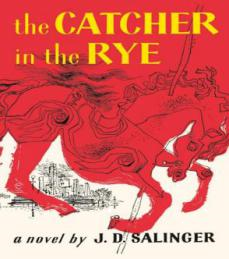
| If you’re visiting New York City, read the book “The Catcher in the Rye”, which mentions plenty of NYC landmarks.
“The Catcher in the Rye” is a classic tale of a lost teenager’s unplanned trip to New York City. In the novel, Holden Caulfield visits a nightclub in the East Village, goes ice skating in Rockefeller Center, and takes his sister to the Central Park Zoo.
|
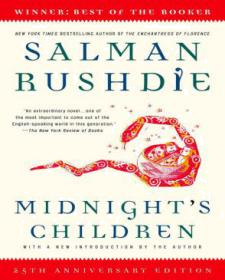
| “Midnight’s Children” is a fantastic novel that shows some of the histories of India.
Salman Rushdie’s story begins at midnight, on the night of India’s independence, when the 1,001 children born that hour are found to own magical powers. The book is set during 20th-century India with plenty of magical elements.
|

| Haruki Murakami’s “1Q84” is an adventure that’s perfect for the plane ride to Japan.
Well-known Japanese author Haruki Murakami creates a novel called 1Q84 where nothing feels right and everything is slightly different. Set in Tokyo, Japan, this novel is sure to interest you greatly during your trip.
|
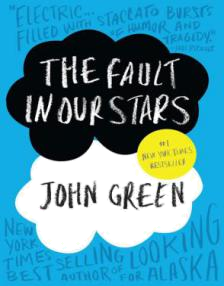
| As you’re traveling around Amsterdam, read “The Fault in Our Stars”. There’s also a film from this book.
Made into a film in 2014, John Green’s story of two unlucky teenagers includes a trip to Amsterdam. The Anne Frank House and The Rijks Museum are mentioned in the book. Plus, the bench in the film from this novel has even become its own tourist spot.
|
21. What does “Holden Caulfield” refer to in the passage?
A. A famous NYC landmark. B. The lost teenager.
C. The author’s sister. D. The author of the novel.
22. Which book may you choose to read if you believe in magic?
A. The Catcher in the Rye. B. The Fault in Our Stars.
C. Midnight’s Children. D. 1Q84.
23. What is the purpose of the author in writing this passage?
A. To introduce some books to travelers.
B. To describe some world-famous attractions.
C. To encourage people to read more classic novels.
D. To explain how a good novel benefits the local tourism.
B
I must have always known reading was very important because the first memories I have as a child deal with books. There was not one night that I don’t remember mom reading me a storybook by my bedside. I was extremely inspired by the wonderful way the words sounded.
I always wanted to know what my mom was reading. Hearing mom say, “I can’t believe what’s printed in the newspaper this morning,” made me want to grab it out of her hands and read it myself. I wanted to be like my mom and know all of the things she knew. So I carried around a book, and each night, just to be like her, I would pretend to be reading.
This is how everyone learned to read. We would start off with sentences, then paragraphs, and then stories. It seemed an unending journey, but even as a six-year-old girl I realized that knowing how to read could open many doors. When mom said, “The C-A-N-D-Y is hidden on the top shelf,” I knew where the candy was. My progress in reading raised my curiosity, and I wanted to know everything. I often found myself telling my mom to drive more slowly, so that I could read all of the road signs we passed.
Most of my reading through primary, middle and high school was factual reading. I read for knowledge, and to make A’s on my tests. Sometimes, I would read a novel that was assigned, but I didn’t enjoy this type of reading. I liked facts, things that are concrete. I thought anything abstract left too much room for argument.
Now that I’m growing and the world I once knew as being so simple is becoming more complex, I find myself needing a way to escape. By opening a novel, I can leave behind my burdens and enter into a wonderful and mysterious world where I am now a new character. In these worlds I can become anyone. I don’t have to write down what happened or what technique the author was using when he or she wrote this. I just read to relax.
We’re taught to read because it’s necessary for much of human understanding. Reading is an important part of my life. Reading satisfies my desire to keep learning. And I’ve found that the possibilities that lie within books are limitless.
24. Why did the author want to grab the newspaper out of mom’s hands?
A. She wanted mom to read the news to her.
B. She couldn’t wait to tear the newspaper apart.
C. She couldn’t help but stop mom from reading.
D. She was eager to know what had happened.
25. According to Paragraph 3, the author’s reading of road signs shows___________.
A. her own way to find herself
B. her eagerness to develop her reading ability
C. her growing desire to know the world around her
D. her effort to remind mom to obey traffic rules
26. The author takes novel reading as a way to___________.
A. explore a mysterious land
B. develop an interest in learning
C. get away from a confusing world
D. learn about the adult world
27. What could be the best title for the passage?
A. The Pleasure of Reading B. Growing Up with Reading
C. The Magic of Reading D. Reading Makes a Full Man
C
Studies have shown most people fail to realise how much time they spend on their smartphones each day.
Frank and Amelia’s family were put to a test, using a free app called “Moment-Screen Time Tracker”. The Vascellaros—Frank, Amelia, 14-year-old twins Frankie and Joe, and 17-year-old Sam—all said they did not really know they were spending so much time on their phones each day.
“Honestly, I don’t feel like I’m on my phone a lot,” Amelia Vascellaro said. Amelia was on her phone far less often than Frank, according to the app. While Amelia spent about an hour per day on the phone, Frank spent closer to four hours on his phone, which came as a shock to him. The children’s times varied but they often spent more than a couple of hours on the phone as well.
Minneapolis-based Dr. Kirsten Lind Seal sees phone usage come up lot among families. Lind Seal said many family members’ phone use has become problematic.
“If we hear more than once, ‘Do you have to be on your phone right now? Can you please put your phone down? Did you hear what I said?’ it may be a sign that it is negatively influencing our family relationships and our daily lives,” she said.
Lind Seal said actually paying attention to how much time one spends on the phone is a good first step in deciding when to put it down.
She asks parents to encourage more face-to-face communication for teens and young adults as they continue developing their social and emotional skills. “What we find is that we are really losing out on empathy—the ability to understand other people’s feelings and problems—when we spend a lot of time on our smartphones to communicate with other people,” she said.
28. How did the Vascellaros feel about the test results?
A. Satisfied. B. Doubtful. C. Uninterested. D. Surprised.
29. Why did Lind Seal mention the three questions in Paragraph 5?
A. To encourage people to live simple life. B. To ask people if they use phones too much.
C. To explain the signs of problematic phone use. D. To show the importance of close relationships.
30. What is the text mainly about?
A. Too much use of smartphones. B. The influence of apps on teens.
C. Children’s safety on the Internet. D. Problems among family members.
31. From which is the text probably taken?
A. A textbook. B. A journal C. A magazine D. A guidebook
D
The idea of growing food in a desert would make most people laugh but this is quickly becoming a reality. There are currently two desert farms in the world where quality vegetables are being planted cheaply and easily.
Sundrop Farms, based in South Australia, uses experimental greenhouses to grow tomatoes, peppers and cucumbers. The biggest challenge of growing food in a desert, obviously, is the lack of available water. The researchers at Sundrop Farms have gotten around this problem by using the sun to desalinate (淡化) sea water. It can also be used to control the temperature of the greenhouses.
Without depending on limited resources such as land and fresh water Sundrop Farms has made farming a practice. This can increase the world’s food supplies. Another benefit of this kind of farming is that it can be done anywhere, thus reducing the costs of transporting food to distant locations. Yet another benefit is that it reduces the need for pesticides (杀虫剂).
Another experimental desert farm is the Sahara Forest Project, which began in Qatar in December 2012. Greenhouses in the farm are cooled by saltwater. Solar power and other technologies are used together to help make vegetation (植被) grow in the desert environment. As deserts have expanded over recent years around the world due to global warming, this project could solve the problem.
The result form the Qatar project were better than expected and in June of 2014, Jordan agreed to host another one. This will be much bigger than the Qatar project and the project members will have even more opportunities to test their experiments on a much larger scale. It is not clear yet that desert farming resents the future of farming but these projects have shown some success in the field.
32. What does “this problem” in paragraph 2 refer to?
A. Sea water is bard to purify.
B. The desert is short of water.
C. The temperature is high in the desert.
D. Desert farms aren’t fit to plant vegetables.
33. What is one of the characters of desert farming?
A. It needs more pesticides. B. It saves delivery costs.
C. It has a location limit. D. It solves food waste problems
34. What can we know about the Sabara Forest Project?
A. It lives up to expectations
B. It can help produce more food
C. It is started to prevent global warming
D. It uses technology to produce saltwater
35. What can be inferred about desert farming from the last paragraph?
A. It still has problems to solve.
B. It represents the future of farming.
C. Its early success has aroused interest in it.
D. Its aim is to create more job opportunities.
第二节(共5小题;每小题2.5分,满分12.5分)
阅读下面短文,从短文后的选项中选出可以填入空白处的最佳选项。选项中有两项为多余选项。
BE A GOOD TOURIST
Tourism can be both good and bad. 36 but it may also bring some problems.
One growing problem is tourists who want to prove that they have visited a destination. Tourists have used paint, rocks, or even keys to write on the Luxor Temple in Egypt, the Colosseum in Rome, Stonehenge in the UK, memorial stones at the bottom of Qomolangma, and many, many other places. Thousands of tourists sites are being destroyed by tourists who “love them to death”. 37 . If you want to leave a mark on the world, do it by changing someone’s life with kindness and love. Pass kindness along to future generations, not destruction.
38 . For example, Chiang Mai University in Thailand and Yonsei University in South Korea have great numbers of tourists visiting their campuses and walking through their libraries and other public areas, taking pictures of students and disturbing their studies. I have three words for tourists like this: please be considerate. 39 .
The number of problems from tourists is endless: walking in large groups without considering others who need to walk by, crossing roads without observing local traffic laws, and many more. The only way to solve the issue of the terrible tourist is to make sure that you are not one! 40 . Remember, whenever you step outside your country’s borders, you are representing your country to the rest of the world.
A. Just think from other aspects.
B. When in Rome, do as the Romans do.
C. Have fun in a way that does not disturb others.
D. Be the best, kindest, most polite tourist possible.
E. I have three words for people like this: please stop it.
F. Another big problem in some places is tourists disturbing the local people and life.
G. It brings in money for the local economy and creates lots of jobs for locals.
第三部分语言运用(共两节,满分30分)
第一节 (共15小题;每小题1分,满分15分)
阅读下面短文,从每题所给的A、B、C、D四个选项中选出可以填入空白处的最佳选项。
Attitude is everything. There is never a need to respond to anything that doesn't make you feel 41 . The Law of the Garbage Truck totally 42 my attitude to things.
One day I got in a 43 to the airport. We were driving in the right lane when a black car 44 out of a parking space right in front of us. My taxi driver 45 the other car by just inches!
The driver of the black car, who almost caused a big 46 , started shouting at us. My taxi driver just smiled and waved at the guy. He was really 47 . So I asked, “Why? That guy almost ruined your car and sent us to the 48 !”
That was when my taxi driver taught me what I now 49 “The Law of the Garbage Truck”. He 50 that many people are like garbage trucks. They run around full of 51 (frustration, anger, etc). As their garbage 52 , they need a place to dump it and sometimes they'll dump it on you.
Don't take it 53 . Don't take their garbage and 54 it to other people. Just smile, wave, wish them well, and move on. Love the people who treat us right and pray for the ones who don't. 55 is ten percent what you make it and ninety percent how you take it!
41. A. calm B. good C. upset D. disappointed
42. A. formed B. kept C. changed D. exchanged
43. A. plane B. bus C. train D. taxi
44. A. stopped B. jumped C. left D. struggled
45. A. hit B. followed C. attacked D. missed
46. A. conflict B. accident C. injury D. failure
47. A. careful B. frightened C. friendly D. angry
48. A. street B. hospital C. garage D. airport
49. A. give B. admit C. need D. call
50. A. complained B. explained C. insisted D. promised
51. A. energy B. luggage C. rubbish D. intention
52. A. piles up B. picks up C. gives out D. runs out
53. A. casually B. easily C. personally D. formally
54. A. remove B. appreciate C. offer D. spread
55. A. Life B. Nature C. Happiness D. Success
第二节 (共10小题;每小題1.5分,满分15分)
阅读下面短文,在空白处填入1个适当的单词或括号内单词的正确形式。
Last year, John Li studied at a British secondary school 56 an exchange student. He stayed with a lovely family and went to school with their son, Daniel, 57 was also in year ten.
Students there usually have to learn nine subjects at secondary school. The classes are different from 58 in China. Each teacher has their own classroom and the students move around for every lesson. He found it easy 59 (learn) Maths because the material was less advanced in the UK 60 in China. However, it was a big challenge for him to learn in English. Challenging as his homework was, his teachers and classmates were always ready to help him and offered him plenty of 61 (encourage).
He had lunch in the school dining hall, after which, he 62 (will) play sports with his classmates. He also found that 63 (join) clubs was a good way to make friends with local students. The Rugby Club was the one that most 64 (attract) him. He couldn't wait 65 (invite) Daniel to visit China.
第四部分 写作(共两节,满分40分)
第一节 (满分15分)
假定你是李华,上周日你父母带你去爬山。请你写一封邮件与外国网友Chris分享这次经历,内容包括:
1.爬山的过程;
2.你的收获。
注意:
1.写作词数应为80左右;
2.请按如下格式在答题卡的相应位置作答。
Dear Chris,
__________________________________________________________________________________________________________________________________________________________________________________________________
Yours,
Li Hua
|
One possible version:
第二节(满分25分)
阅读下面短文,根据所给情节进行续写,使之构成一个完整的故事。
One day, my brother and I were alone in our apartment. The reason was that my parents had both gone for a ball party and had left me in charge of everything. I was doing my homework while my younger brother was watching TV. All of a sudden, the doorbell rang. Ding-dong! Ding-dong! My younger brother had rushed to the door before I decided to answer the door. We both thought that our parents had come home. As a result, he unlocked the door and opened it.
Outside of the house stood a man who wore a black raincoat and black rubber boots. He looked no different from other people and he said that he was a salesman and asked politely if our mother or father was at home so he could talk with them.
Without any thinking, my brother said, “No.” He asked if we would like to buy some comic books, which he was selling. I quickly explained to him that we were not supposed to buy anything without our parents’ permission. However, it seemed that he was not willing to follow my advice and he had an intention to enter our house.
Then, I realized something terrible would happen. As I was about to close the door, he forced his way into our house. He took out a knife and forced me to tie up my brother’s hands with some rope which he took out from his pocket. I tied up his hands but I tied in a special way so my brother could untie himself as we often did. The man then tied my hands up and locked both of us in the kitchen.
Soon, he went upstairs to search the bedroom for something valuable. I managed to teach my brother to untie the rope on his hands. He then untied me. I rushed to the telephone to call the police, but the line was dead.
Paragraph 1:
The doors were all locked from the outside and what’s worse, I did not have the keys.
____________________________________________________________________________________________________________________________________________________________________________________________________________________________________________________________________________________________________________________________________________________________________________________________________
Paragraph 2:
Just at the same time our parents came back home.
____________________________________________________________________________________________________________________________________________________________________________________________________________________________________________________________________________________________________________________________________________________________________________________________________
|
|
 川公网安备51152402000101号 )|网站地图


 发表于 2026-3-11 05:55:35