|
|
七年级下 Unit2
第五课时Section B (2a-2c)
Teaching and learning Goals:
(一)语言知识及功能:
1. 能正确拼读、识记并使用本课时的词汇:quickly, either ,either… or…, lot, lots of, sometimes, taste
2. 能学会正确使用与日常活动相关的常用表达:get up, go to school, brush teeth, eat hamburgers/fruit/vegetables/ice-cream, play basketball/volleyball, watch TV, play computer games, do homework, go to bed, go home, swim, take a walk/shower,等。
3. 能运用快读略读和慢读细读等阅读技巧,理解文章大意,了解文章细节,能够分辨哪些日常活动属健康的范畴,哪些不健康。
(二)学习策略:自主学习、合作探究、Classifying 和Role-playing
(三)情感目标:
学会合理安排自己的学习和生活,逐渐养成良好的作息习惯,能在生活中关心自己和他人。
(四)文化知识:了解英语国家人们的日常生活习惯。
Teaching and learning steps:
StepI. Preview
Ask Ss to read the book and put the Chinese into English orally, then write them down without looking at your book.
1.英汉互译(短语)
①早起__________②吃蔬菜________③吃得快____________________
④做运动_________⑤刷牙__________⑥吃顿丰盛的早餐____________
⑦go to bed early___________⑧ eat ice-cream__________
⑨take a shower___________⑩go toschool_________
2.翻译句子。
①我没有很多时间吃早饭_______________________
②我有时候打半小时的篮球____________________
③当我到家时,我总是先做作业______________________
④晚上,我要么看电视,要么玩电子游戏。
_______________________
⑤她知道这对她没好处。____________________
⑥晚上,她做作业然后通常游泳或者散步。
(设计意图:该部分预习内容可以帮助学生更有目的性的预习,同时通过检测学生的预习效果,达到以学定教的目的。)
Step II. Warming-up& leading in.
T: Boys and girls, let’s enjoy a song Lazy Mary.
 T:Do you like the song?
Ss: Yes.
T: Well. Are you lazy?
Ss:Yes. /No.
T: Do you often get up early?
 S1: Yes, I do.
T: Do you think it’s healthy?
S1: Yes.
T: Do you often eat quickly?
S2: Yes, I do.
T: Do you think it’s healthy?
Ss:No.
T:OK. Let’s look at some activities in 2a. What activities are healthy? What activities are unhealthy?
Check (√)the activities you think are healthy.
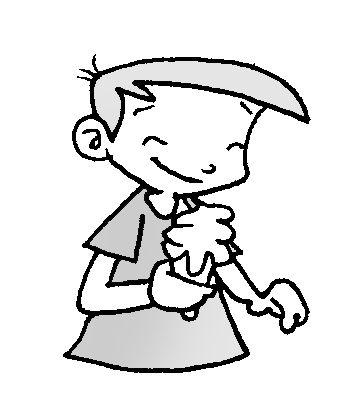
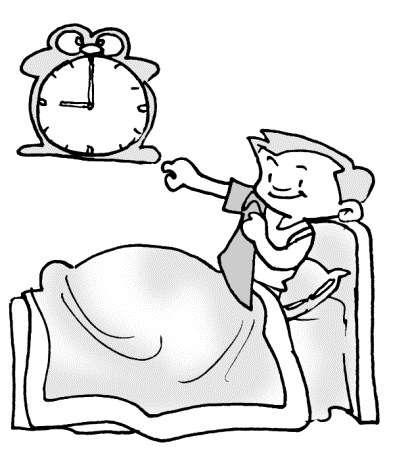
1.go to bed early 4.eat ice-cream
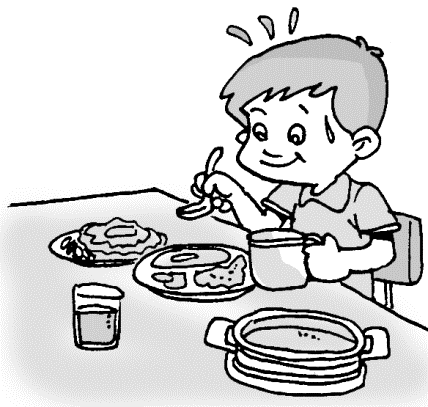

2.eat quickly 5.eat vegetables
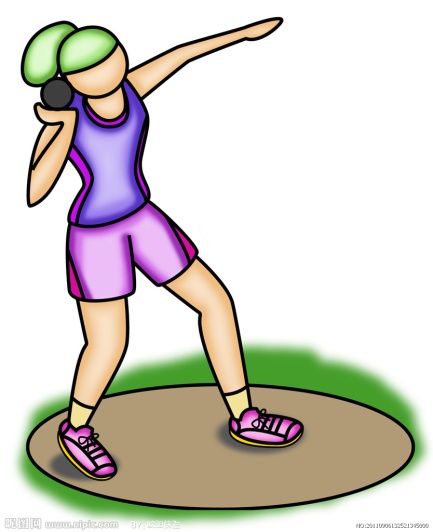

3.play sports 6.take a walk
(设计意图:通过一首简单易懂的歌曲来激发学生学习的学习兴趣,鼓励学生自由发表言探讨,探讨健康的生活方式,为学生顺利阅读铺平道路。)
Step Ⅲ.While –reading activities
Give Ss 30 seconds to read the passage fast and silently to find the general idea.
The general idea of the passage is about ----- ( )
A. Tony’s and Mary’s habits.
B. Tony’s and Mary’s interests.
C. Tony’s and Mary’s family.
(设计意图:给学生限定时间,快速阅读,对课文整体感知,了解文章大意。)
2. Careful reading
Ask Ss to read the passage carefully and silently to find the specific ideas.
Task one: Answer the questions:
⑴ Whose life do you think is healthier, Tony or Mary?
_________________________________________________________________
⑵ Does Tony like exercising in the evening?
_________________________________________________________________
⑶ What food does Mary eat for lunch?
_________________________________________________________________
⑷What sports does Mary play in the evening?
_________________________________________________________________
⑸ When does Mary go to bed?
_________________________________________________________________
Task two: Read the passage and judge T or F
( ) 1. Tony likes get up late and usually has a quick breakfast.
( ) 2. Tony always does his homework in the end when he gets home.
( ) 3. Tony usually eats fast food for lunch.
( ) 4.Mary likes eating ice-cream after dinner.
( ) 5. Tony and his sister Mary like the same ball.
Task three: Complete the mind map with the information in the passage.
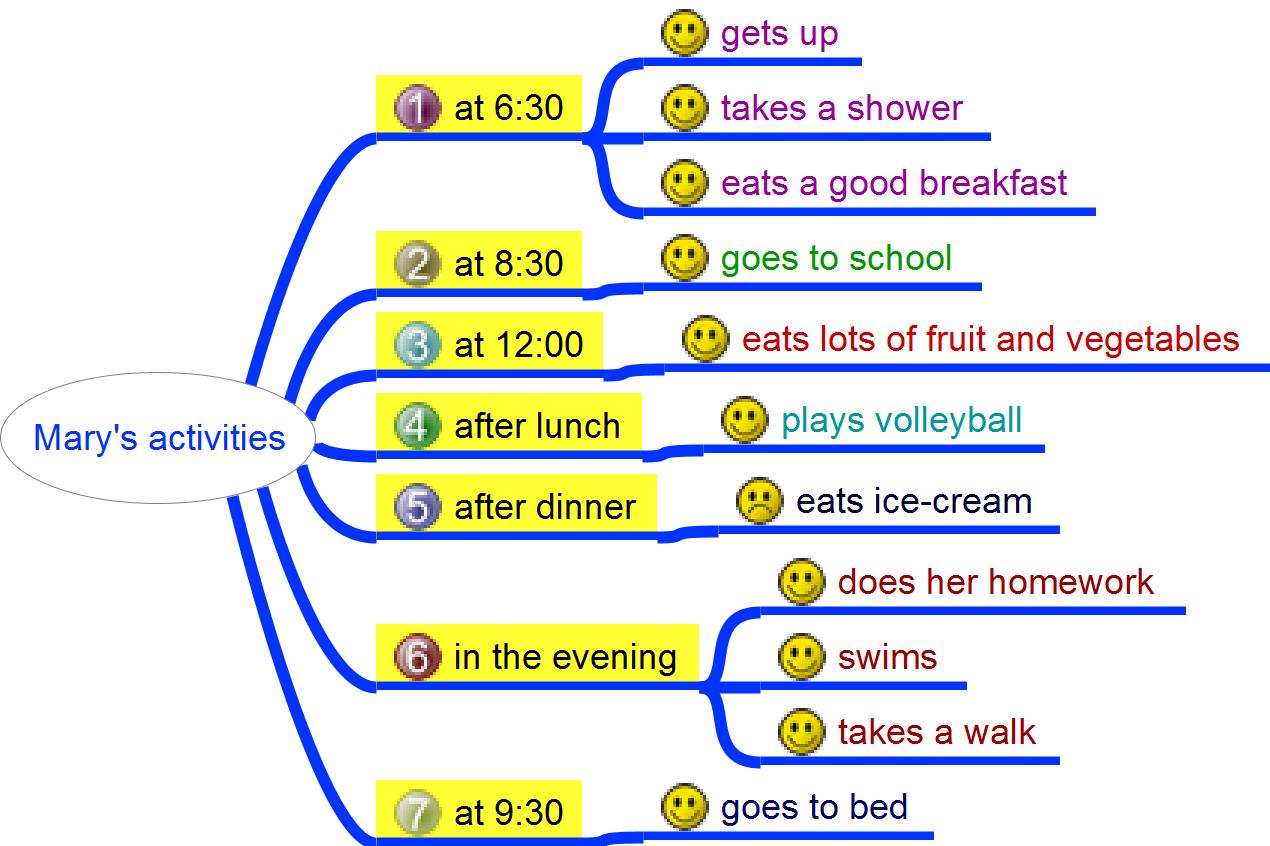
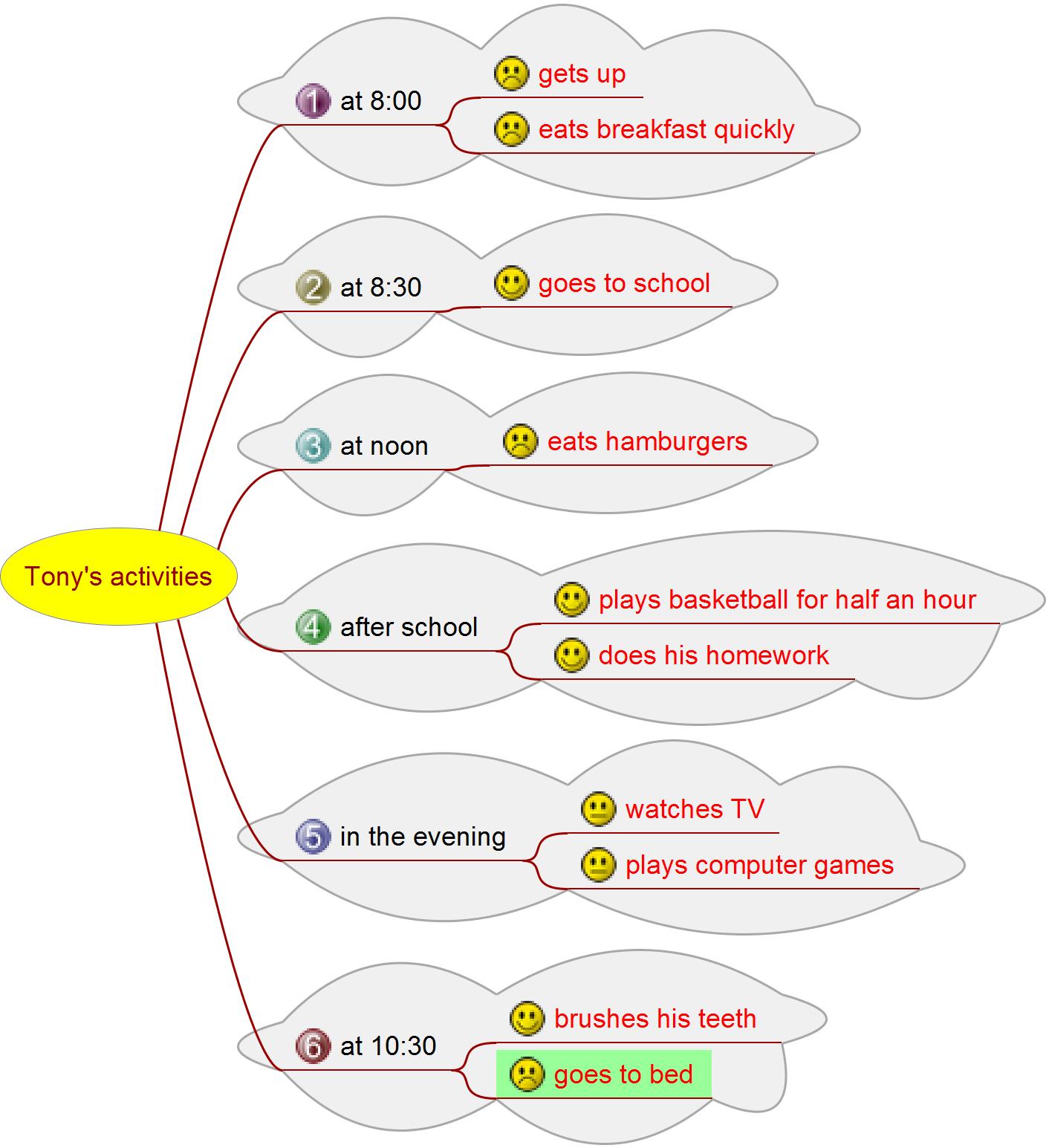 Task four: According to the mind map, pick out the unhealthy habits of each person. Then think of healthy activities for them.
Names
| Unhealthy habits
| Healthy activities
| Tony
| gets up late
| gets up early
| | eats breakfast quickly
| eats breakfast slowly and well
| | eats hamburgers for lunch
| eats lots of fruit and vegetables for lunch
| | goes to bed late
| goes to bed early
| Mary
| eats ice-cream after dinner
| eats some fruit after dinner
|
(设计意图:通过细读,让学生逐步了解文章的细节。问题式、图式和表格式解读文章,加强学生对篇章的理解。)
Step IV. Post-reading
Task one: Read aloud
(1) Listen and repeat.
(2) Ask Ss to read the passage by imitating the tape in front of the class.
Task two: Retell
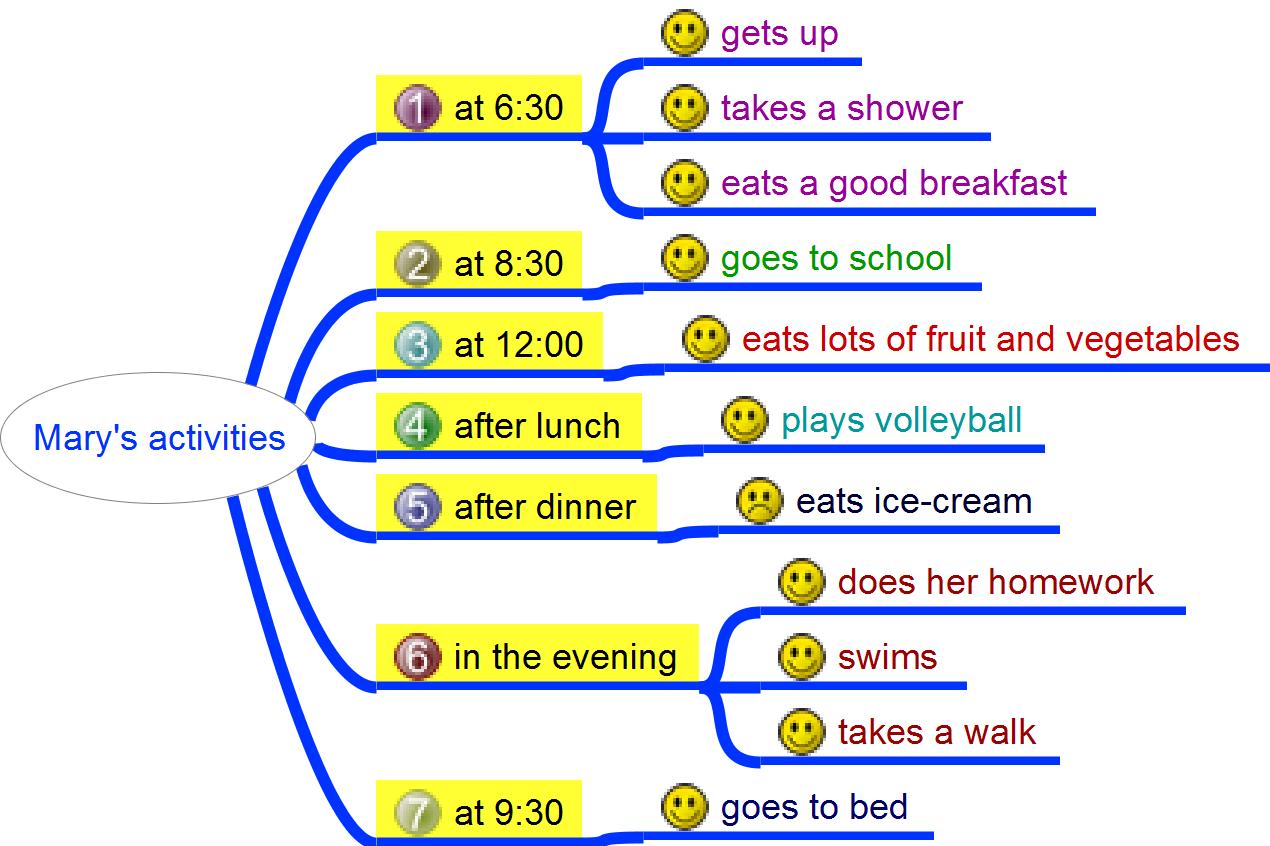
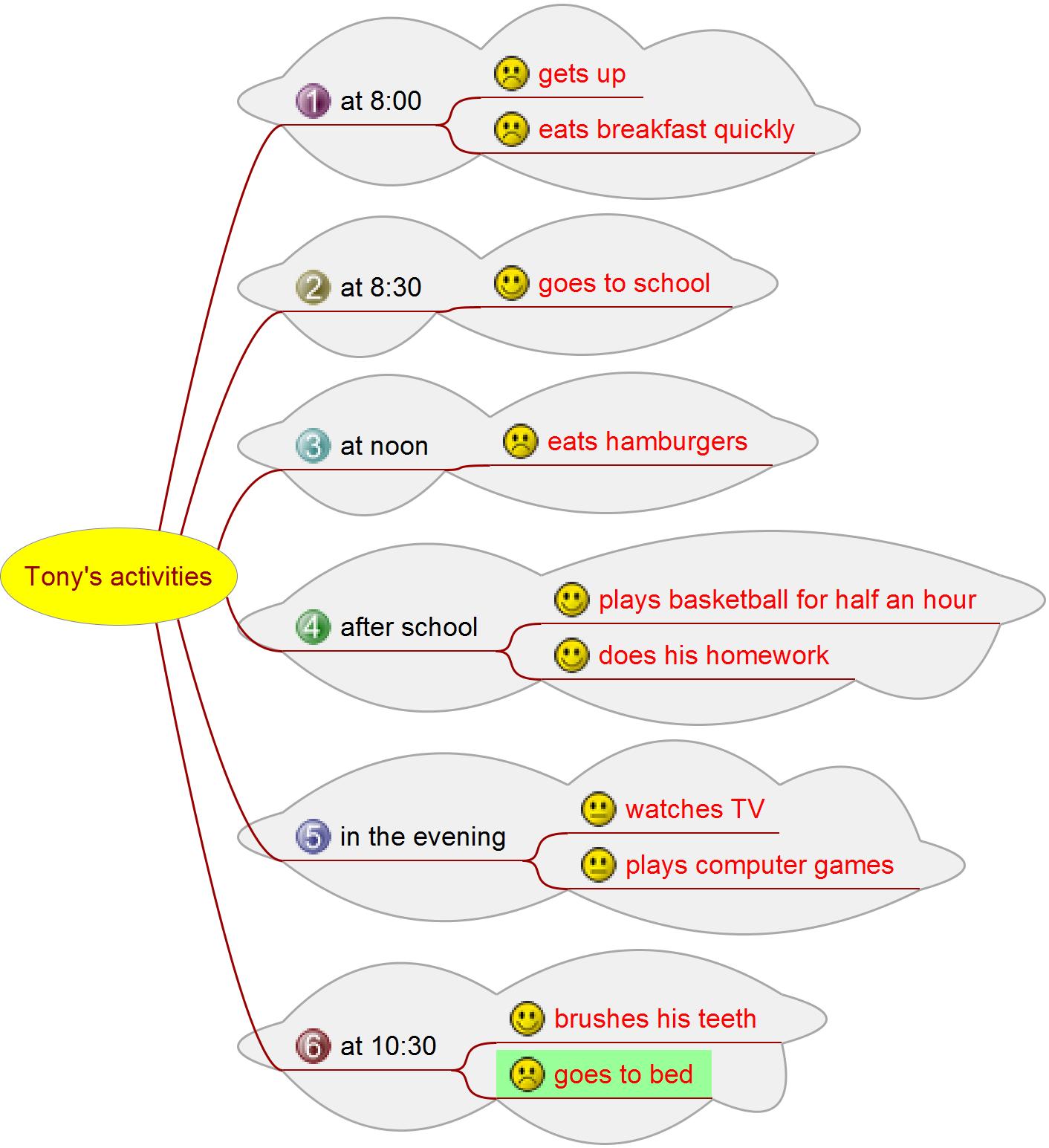 Let Ss retell the passage according to the mind map.
Task three: Complete the rewriting without looking at the passage.
His name is Tony .He doesn’t like to get up early.In the morning, he____ up at eight .Then he to school at eight thirty. Hehave much time for breakfast, so he usually very quickly.For lunch, he usually____ hamburgers.Afterschool, he sometimes basketball for half an hour. When he home, he always his homework first. In the evening, he either_____ TV or_____ computer games. At ten thirty, hehis teeth and then he to bed.
Task four:
Imagine you are a health advisor, now Tony asks you for help. He wants some advice.

Health advisor: What can I do for you?
Tony: I need your help. I’m too fat and lazy, but you know, I don’t want to be fat.
Health advisor: Sure. What time do you usually get up?
Tony: I get up at eight .
Health advisor:That sounds late. Maybe you can get up early. And do you eat quickly?
Tony: Yes. I don’t have much time for breakfast, so I usually eat veryquickly.
Health advisor: I know. What food do you like?
Tony:I like hamburgers for lunch.
Health advisor: Do you like exercising?
Tony: Yes. I like playing basketball.
Health advisor: Great.Exercising is good for you. What do you do in the evening?
Tony: I either watch TV or play computer games.
Health advisor: Uh-huh. What time do you usually go to bed?
Tony: At 10:30.
Health advisor: If you don’t want to be fat, you can get up and go to bed early. You need to eat a good breakfast and lots of fruit and vegetables for lunch. Please exercise more in your free time.
(设计意图:学生对文章比较熟悉后,学生可以根据关键信息复述文章内容,然后进行语音训练,让学生掌握句子连读、意群停顿等朗读技巧。最后一个“健康顾问”环节,给学生一个练习句型的真实的情境,为他们提供一个运用知识的机会。达到学以致用的目的。)
Step V.Emotional experience
Play a video habit determines destiny.(习惯决定命运)
T: What can you learn from it?
Ss: We should have healthy habits.
T: If we want to be healthy, we should have healthy habits. So, now change your habits, and change your fate.
(设计意图:情感体验的设计,让学生学会合理安排自己的学习和生活,逐渐养成良好的作息习惯,能在生活中关心自己和他人。)
Step Ⅵ.Inquiry into knowledge by translation
1.In the evening, I either watch TV or play computer games.
意为_________________________________________________.
1).either 意为“ ”,一般用于 句末,而且用逗号和前句隔开。
如:He doesn’t like ice-cream, and I don’t like it, .(也不喜欢它)。
2). either…….or……意为“ ”,此结构可以连接两个独立的单词,短语或者句子。作主语时,后面的谓语动词遵循就近原则。
如:(1)要么是你错了,要么是他错了。
you he (be) wrong.
(2)每天晚上,他要么散步,要么做运动。
He a walk sports every evening.
- She knows it’s not good for her, but it tastes good!
意为_________________________________________________.
taste是系动词,系动词后一般接 __________词,如:The apple _______ good/ delicious/sweet.
与taste用法类似的还有feel, taste, sound, look, smell, get等。
look意思是“ _________ ”,如 You look great today.
sound意思是“ _________ ”,如 That ________ good.
(设计意图:学生完成对文本的阅读训练,将学习转移到语言知识的学习和记忆,提升学生独立思考和分析、解决问题的能力以及与他人合作的能力。)
Step Ⅶ.The end --of class test
(一)根据课文内容,用介词填空。
1.I don’t have much time ___________ breakfast
2.Afterschool, I sometimes play basketball ________half an hour.
3.________ ten thirty, I brush my teeth and then I go to bed.
4.She always eats ice-cream _________ dinner.
5.She knows it’s not good ________ her.
6._________ the evening, she does her homework.
7. She eats lots _________ fruit and vegetables for lunch.
8. At half _____ nine, Mary goes to bed.
(二)根据汉语提示完成句子。
1. 我没有时间吃早餐,因此我通常吃得很快。
I don’t have _____ ____ for breakfast, so I usually ___ ____ ______.
2. 他在晚上或者看电视或者玩电脑游戏。
He ______ watches TV __ plays computergames in the ________.
3. 午餐,她吃很多的水果和蔬菜。For _____, she ____ ____ ___ fruit and vegetables.
4. 冰淇淋尝起来很好,但对她的健康不好。
Ice-cream ____ _____, but it’s not _____ ____ her.
5. 在晚上,她通常游泳或散步。
In the evening, she usually ______ or ____ __ ____.
6. 他有时候会打半个小时的篮球。
He _________ plays basketball __ ____ an hour.
(设计意图:在课堂学习的基础上,让学生灵活运用并巩固本单元的目标语言,同时也提高了学生综合运用语言的能力。)
StepⅧ.Homework
- Read and recite the passage.
- Design a healthy schedule for Tony.
参考答案:
(一)for, for, at, for, for, In, of, past
(二)1.much time ;eat very quickly
2.either or; evening
3.lunch;eats lots of
4. tastes good; good for
5.swims;takes a walk
6.sometimes;for half
亮点:
在读前预热阶段,通过一个有关生活习惯的视频导入情景,激起学生的学习欲望。我根据实际采用了较多的图片,激活学生头脑中的图式,针对本课时文章,哪些日常习惯属健康的范畴,哪些不健康就是我们脑海中的图式。一些短语的呈现,渗透了阅读课文中的部分短语,为学生顺利阅读铺平了道路。
关于阅读教学,教师的职责不是逐词逐句分析文章,而是培养学生的阅读习惯。先快读略读,了解文章大意,后慢读细读,了解文章细节。先默读,后朗读。让学生限时阅读,多次阅读,每次阅读都有不同的目的。
思维导图用第三人称单数形式呈现,帮助学生克服动词形式这个难关。然后通过复述课文、读后语音训练、当健康顾问等环节,让学生灵活运用并巩固本单元的目标语言,达到学以致用的目的。
不足之处: 一节课的时间毕竟有限。不能面面俱到,还需在以后的复习中查缺补漏。
使用建议:
本节课设计活动比较多,希望时间能合理把握,改写文章的环节可以留到课下作为简单的写作任务。
|
|
 川公网安备51152402000101号 )|网站地图


 发表于 2026-3-3 06:24:33