自主学习方案
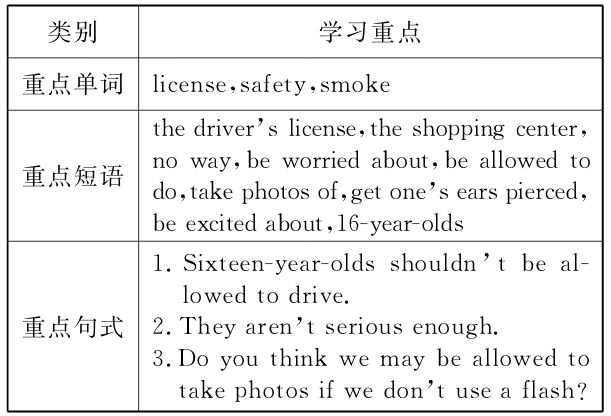
1.学生自学生词,并记住单词拼写和拼读。
2.预习课本,找出重点短语和句式。(见学案中预习检测的内容)
3.读记后完成预习检测作业。 Step 1复习
检查上一课时课后提升作业。 Step 2情景导入
Teacher: Could you tell me what students should be allowed to do or shouldn’t be allowed to do?
Students:
1.Students should be allowed to have parttime jobs.
2.Students shouldn’t be allowed to get their ears pierced…
环节说明:通过课前师生互动,让学生感兴趣,调动他们的积极性,同时“be allowed to do sth.”的应用,为学习新课埋下了伏笔。 Step 3完成教材1a~1c教学任务
1.要求学生阅读1a部分的内容后自己判断。
2.检查答案。
参考案例:
Teacher: I don’t think students should be allowed to go to Net Bar.
Students: I agree.
3.要求学生听第一遍录音,完成1b的听力任务。
4.要求学生听第二遍录音,并逐句进行跟读。
5.完成教材1c的任务,要求学生根据1a中的陈述,编写对话,进行练习。
6.听力内容巩固训练。要求学生根据所听到的内容完成下列问题。
(1)根据所听到的内容回答问题。
What is the relationship of the two speakers?
(2)再听,完成填空。
The woman doesn’t think sixteen year olds should be allowed to because they aren’t enough. Anna thinks teenagers should be allowed to because she is not a child.
答案:(1)Mother and daughter.(2)drive, serious, choose their own clothes
环节说明:将听、说、读、写的任务结合起来,不仅锻炼了学生的语言综合运用能力,还巩固了学生对目标语言的学习、识记和运用。 Step 4完成教材2a~2d的任务
1.播放第一遍录音,完成2a、2b的听力任务。
2.完成教材2c的任务,要求学生使用“should(not) be allowed to”进行对话练习。
3.读2d对话,然后表演对话。
环节说明:通过学习2a~2d使学生对“should(not) be allowed to”的语言有所了解;同时锻炼学生的听力及抓取关键信息的能力,锻炼学生的口头表达能力,巩固对含情态动词的被动语态的结构的认识。 Step5小结训练
1.青少年应该允许选择他们自己的衣服。
Teenagers _______________________________choose their own clothes.
2.他想花费些时间与朋友在一起。
He wants to ___________some ____________________ his friends.
答案:1.should be allowed to 2.spend,time with Step 6问题探究
( )1. I think ___________is the first.
A. safe B. safely
C. safety
( ) 2. He wants to get his hair _________________.
A. cuts B. cut
C. cutting D.to cut
答案:1.C 2.B 教学反思
本课时教师通过情景设置导入新课,并引导师生互动,调动学生学习的兴趣与积极性。同时分小组对话,加强对重点短语“be allowed to do sth.”的应用和掌握,并且锻炼了学生的口头表达能力,巩固了学生对含情态动词的被动语态的认知和理解。
 川公网安备51152402000101号 )|网站地图


 发表于 2026-3-6 04:25:11